Seasonal Overlaps and Recovery Windows: Extracting Edges from Football Congestion Periods and Tennis Tournament Backlogs
Gisela Jung · Nov 3, 2026

Seasonal Overlaps and Recovery Windows: Extracting Edges from Football Congestion Periods and Tennis Tournament Backlogs
In November 2026 football calendars pack midweek league and cup fixtures into tight blocks while tennis circuits run overlapping indoor events across multiple continents, and these patterns create measurable recovery intervals that analysts track through performance metrics. Data from league tracking systems show teams averaging fewer than four full rest days between matches during this stretch, whereas tennis players often log consecutive best-of-three or best-of-five sets across successive days.Football Fixture Density in Late Season
Premier League and European domestic leagues schedule clusters of games around international breaks, and this density compresses preparation time for squads traveling across time zones. Figures released by the Union of European Football Associations indicate that clubs contesting multiple competitions log up to nine fixtures in a 28-day window during November periods, with recovery sessions limited to light tactical work rather than full regeneration protocols.
Performance records compiled across top divisions reveal drops in high-intensity running distance when intervals fall below 72 hours, and these reductions appear most pronounced among players logging more than 300 minutes across the prior fortnight. External workload data collected via GPS devices further illustrate how defensive lines concede higher expected goals when rotation options dwindle, because starting elevens remain on the pitch longer without adequate neuromuscular reset.
Tennis Backlog Patterns Across Tours
ATP and WTA calendars place multiple 250- and 500-level events in consecutive weeks on indoor hard courts, and this structure produces back-to-back tournament commitments that extend travel and match loads. Records maintained by the International Tennis Federation document average match counts exceeding four per week for players advancing deep into draws, with changeover times between events often measured in single days rather than full weeks.
Medical monitoring programs track serve velocity and rally tolerance across these compressed schedules, showing measurable declines after three consecutive days of best-of-three competition. Observers note that qualifiers entering main draws following preliminary rounds face additional accumulated stress, because their weekly match volume climbs without corresponding rest blocks built into the calendar.
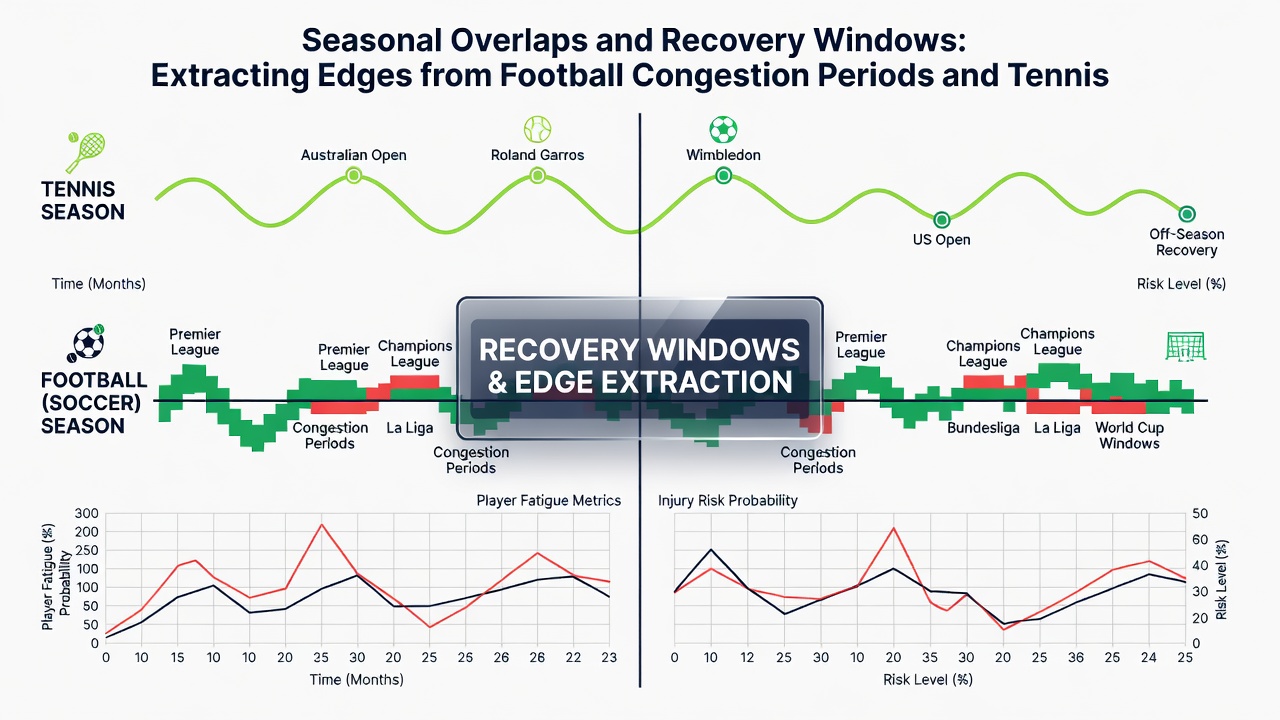
Overlapping Windows and Cross-Sport Data Integration
November 2026 places both sports under simultaneous pressure points, because football congestion coincides with tennis indoor swing events that stretch from Europe to Asia-Pacific venues. Analysts cross-reference recovery timelines from each domain to identify periods when rest differentials become statistically significant, using metrics such as distance covered per minute in football and first-serve percentage retention in tennis.
Studies published through the Australian Institute of Sport demonstrate that multi-sport monitoring frameworks can flag performance variance when recovery windows shorten below sport-specific thresholds, and these models incorporate sleep data alongside training load to refine edge calculations. League and tour operators release anonymized datasets that allow independent verification of how back-to-back commitments correlate with outcome shifts in subsequent fixtures or matches.
Practical Application of Recovery Metrics
Betting markets and performance desks incorporate rest differentials into predictive models by weighting recent fixture lists against historical output under similar conditions. Teams or players returning from shorter recovery intervals show documented changes in key indicators, including reduced sprint frequency for football sides and lower break-point conversion for tennis competitors, according to aggregated season-long statistics.
Rotation patterns become visible through official squad announcements, and these signals allow observers to quantify the impact of enforced rest on substitute contributions. Tournament entry lists in tennis similarly highlight players navigating extended schedules, providing comparable context for evaluating late-round resilience when backlogs accumulate.
Conclusion
Seasonal overlaps in November 2026 compress recovery windows across football and tennis calendars in measurable ways, and the resulting performance datasets supply concrete inputs for identifying statistical edges. Tracking these intervals through official league and tour records yields repeatable patterns that align with documented shifts in workload tolerance and match outcomes.