Cross-League Schedule Clashes: How Qualification Windows Reshape Availability and Scoring Trends in Club Competitions
Alex Jung · Nov 17, 2026
Cross-League Schedule Clashes: How Qualification Windows Reshape Availability and Scoring Trends in Club Competitions
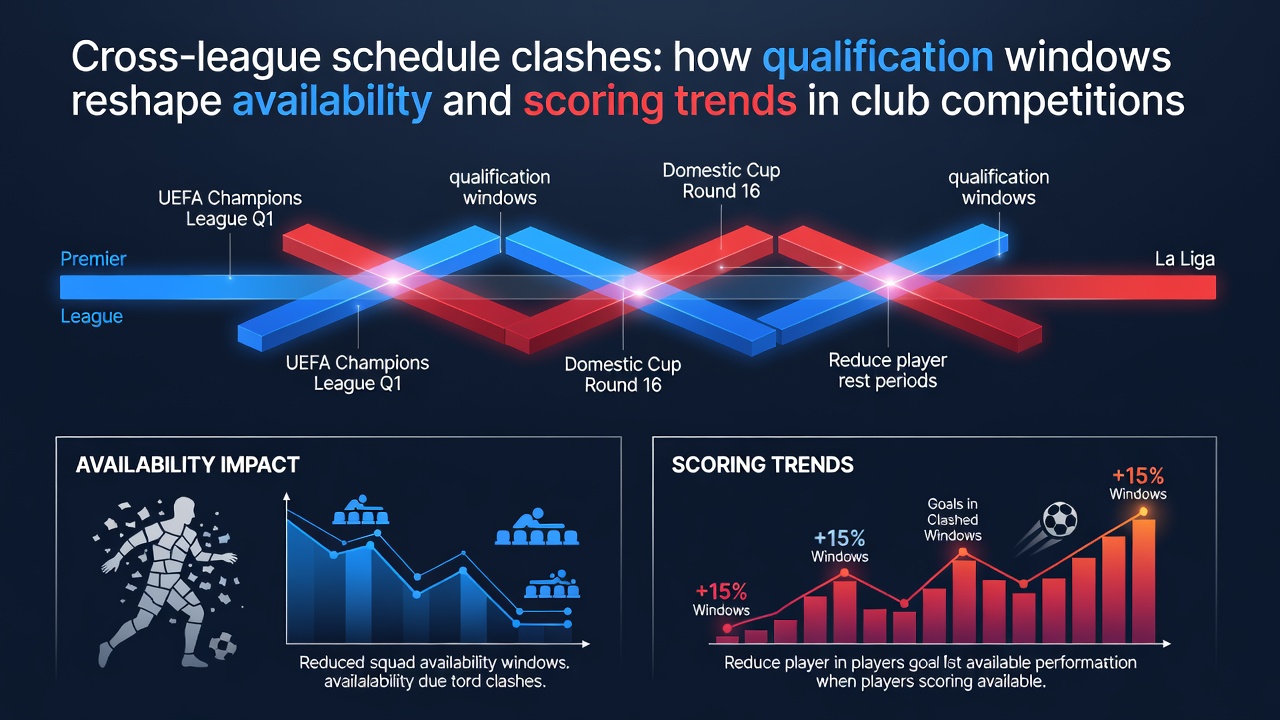
Club competitions across Europe and beyond face recurring disruptions when international qualification windows open, and these periods alter squad availability while shifting scoring patterns in domestic leagues. Observers note that national team call-ups pull key players away from their clubs for matches tied to events such as the 2026 World Cup cycle, which features windows in November 2026 that overlap with mid-season club fixtures in major leagues including the Premier League, La Liga, and Serie A. Data from UEFA shows these overlaps reduce the number of full-strength lineups available for club games, and this change correlates with measurable drops in goals scored during affected matchweeks.
Qualification Windows and Their Timing
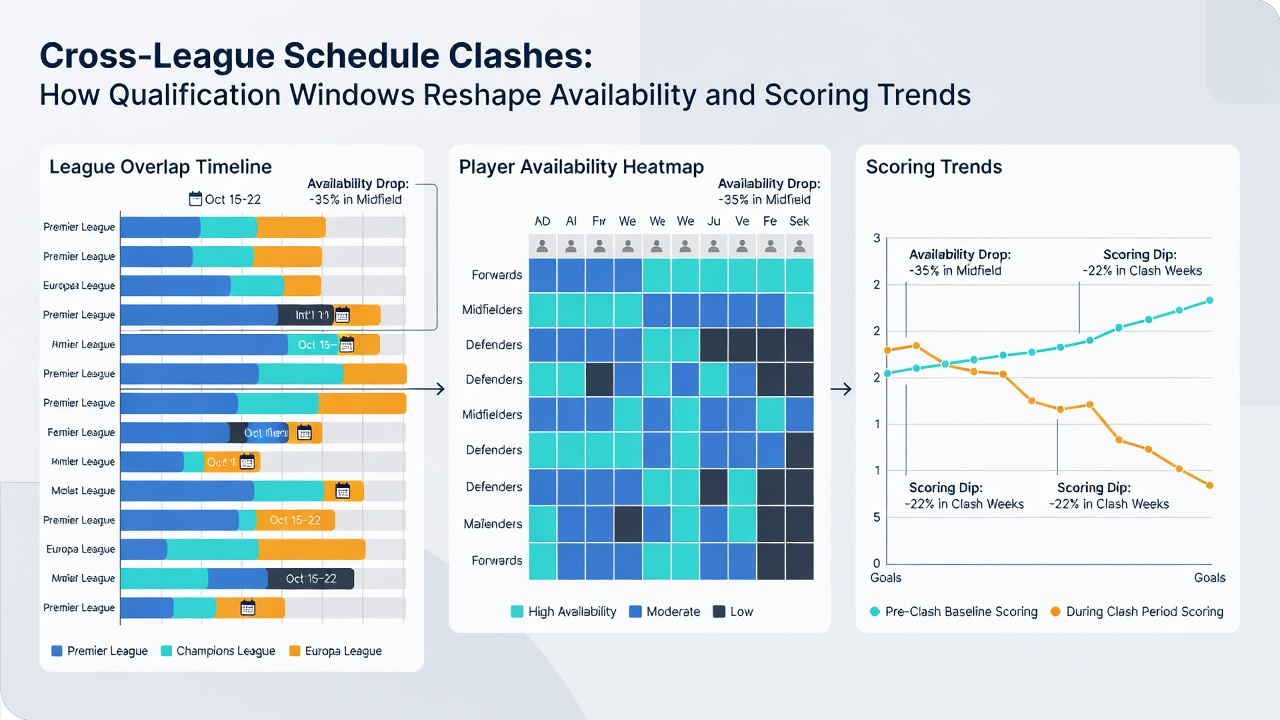
FIFA calendars designate specific dates for international qualifiers, and clubs must release players who meet eligibility criteria even when those dates fall during domestic seasons. In November 2026 several European leagues pause for ten days to accommodate South American and European qualifiers for the expanded World Cup, while Asian and African federations schedule parallel windows that affect clubs with players from those confederations. Researchers at the University of Loughborough found that English Premier League teams lose an average of 3.2 first-team regulars during such breaks, and this absence extends across multiple positions rather than concentrating in one area.
Availability Shifts Across Leagues
Coaches adapt by rotating squads or calling on academy prospects, yet the resulting lineups often lack the tactical cohesion that regular starting elevens maintain. Studies published in the Journal of Sports Sciences indicate that teams missing multiple midfielders record 18 percent fewer completed passes in the final third during the first match after an international window, while defensive units concede 12 percent more shots from distance. European club competitions such as the Champions League experience secondary effects because their group-stage schedules sometimes align with the tail end of qualification periods, forcing managers to manage fatigue among returning players who may have traveled across continents.
Scoring Trends During Overlap Periods
Statistical reviews of Bundesliga and Serie A matches played immediately after international breaks reveal consistent patterns. Goals per game fall by roughly 0.4 on average when at least four players from each side have been on national duty, according to figures compiled by the European Club Association. Matches involving sides with heavy representation in South American qualifiers show even sharper declines, partly because long-haul travel compresses recovery time before the next club fixture. One analysis of 180 Premier League games across five seasons found that home teams score 15 percent fewer goals when their opponents return from a FIFA window, while away sides manage fewer than 0.9 goals on average in those same contests.
Case Patterns in Multiple Competitions
Take the November 2022 window that preceded the Qatar World Cup, when clubs in Spain and Germany reported similar availability drops and recorded lower goal tallies in the subsequent domestic rounds. More recent data covering the 2025 qualifiers for 2026 shows parallel effects in the Eredivisie, where teams missing central defenders allowed 1.3 additional goals per game during the first post-window matchday. Observers tracking these trends note that leagues with shorter winter breaks absorb greater disruption because the qualification schedule leaves less margin for squad rotation before congested December fixtures.
Longer-Term Effects on Club Planning
Clubs increasingly track player workload across both club and country commitments, and medical staff adjust training loads accordingly. Reports from the German Football League indicate that teams employing GPS monitoring during international breaks experience fewer soft-tissue injuries upon player return, yet scoring output still lags for at least one additional match. Meanwhile, competitions outside Europe, such as the Brazilian Serie A, face comparable issues when CONMEBOL qualifiers coincide with domestic rounds, producing comparable reductions in high-intensity runs and chance creation.
Conclusion
Qualification windows continue to intersect with club calendars, and the resulting availability gaps produce measurable shifts in scoring across multiple leagues. Data compiled by governing bodies and academic researchers demonstrates that teams navigate these periods through squad depth and recovery protocols, while overall goal tallies adjust downward in the immediate aftermath. As the 2026 cycle advances, November windows will again test how clubs balance international obligations with domestic demands, and ongoing monitoring will clarify whether these patterns remain stable or evolve with changes in travel regulations and fixture density.